A research digest / GHRH analog
CJC-1295 is a long-acting GHRH analog whose research traces the GH and IGF-1 axis over days, not minutes.
A small, old, and quiet literature — a handful of Phase-1 pharmacokinetic papers and a rat bioconjugate study — read calmly and cited line by line. The DAC and no-DAC forms are kept carefully apart.

What the published CJC-1295 literature actually measured
CJC-1295 raised growth hormone and IGF-1 for days from a single injection. In healthy adults, one subcutaneous dose of 30 or 60 micrograms per kilogram produced a 2- to 10-fold rise in mean plasma GH that lasted six days or more, alongside a 1.5- to 3-fold rise in IGF-1 that held for nine to eleven days; after repeated dosing, IGF-1 stayed above baseline for as long as 28 days, and the analog's own half-life was estimated at 5.8 to 8.1 days [1]. That single result is the whole reason the compound exists, and it is the spine of this site.
CJC-1295 is a synthetic analog of growth-hormone-releasing hormone, built on the first 29 residues of human GH-releasing factor — hGRF(1-29) — with four amino-acid substitutions that block the proteases which would otherwise clear native GHRH within minutes [6]. The DAC variant adds one more trick: a maleimide linker that bonds covalently to circulating serum albumin, dragging the molecule's half-life toward that of albumin itself and turning a minutes-long signal into a multi-day one [6]. The literature on this site is genuinely thin — a few mid-2000s human pharmacokinetic studies, one rat study, one knockout-mouse study, a proteomics note — and we read it that way, without padding.
The most useful thing to understand first is that two very different molecules share the name. The long-acting DAC vs no-DAC distinction is the single most-conflated fact about this compound: CJC-1295 DAC carries the albumin-binding moiety and acts for days; the no-DAC form, marketed as Modified GRF 1-29, keeps the four substitutions but drops the albumin linker and is short-acting, clearing in the minutes-to-hours range [6]. Forums and product pages routinely blur them. The studies do not.
CJC-1295 as a GHRH-analog peptide
CJC-1295 is a peptide, not a steroid and not exogenous growth hormone. It is a chain of amino acids built on the active 1-29 fragment of human GHRH, and it works by the same route the body's own hormone uses: binding the GHRH receptor on the anterior pituitary's somatotroph cells, switching on the Gs/cAMP/PKA signaling that drives GH synthesis and pulsatile release [6]. The released GH then reaches the liver and raises IGF-1, the downstream hormone that carries much of GH's anabolic signal [1].
What makes CJC-1295 a peptide of research interest rather than a curiosity is engineering, not novelty of target. Native GHRH(1-29) is cleaved almost immediately by dipeptidylpeptidase-IV; the D-alanine substitution at position 2 blocks that cut, and three further substitutions guard against deamidation and oxidation [6]. The result is a GHRH signal that survives long enough to be studied as a drug. The albumin-conjugation chemistry of the DAC form was the lead candidate from a series of hGRF(1-29)-albumin bioconjugates screened in rats, where it produced a 4-fold larger GH response than the unconjugated peptide and remained detectable in plasma beyond 72 hours [6].
That is the entire mechanical story, and it is worth telling plainly because most of what circulates online frames CJC-1295 as an anti-aging or muscle-building shortcut. The peer-reviewed record describes a receptor, a signaling cascade, and a pharmacokinetic curve — biomarker movements in research participants, not promised outcomes.
A literature that is small, old, and honest about its gaps
Two early human studies anchor the record. Teichman and colleagues established the multi-day GH and IGF-1 kinetics and the 5.8-8.1 day half-life [1]; Ionescu and Frohman showed that a single dose raised basal GH roughly 7.5-fold and lifted mean GH and IGF-1 by 45 to 46 percent a week later, while the natural pulse pattern of GH secretion stayed intact [2]. That last point matters: continuous GHRH-receptor stimulation did not flatten GH into a steady drip, which is biologically unusual and one of the more interesting findings in the set.
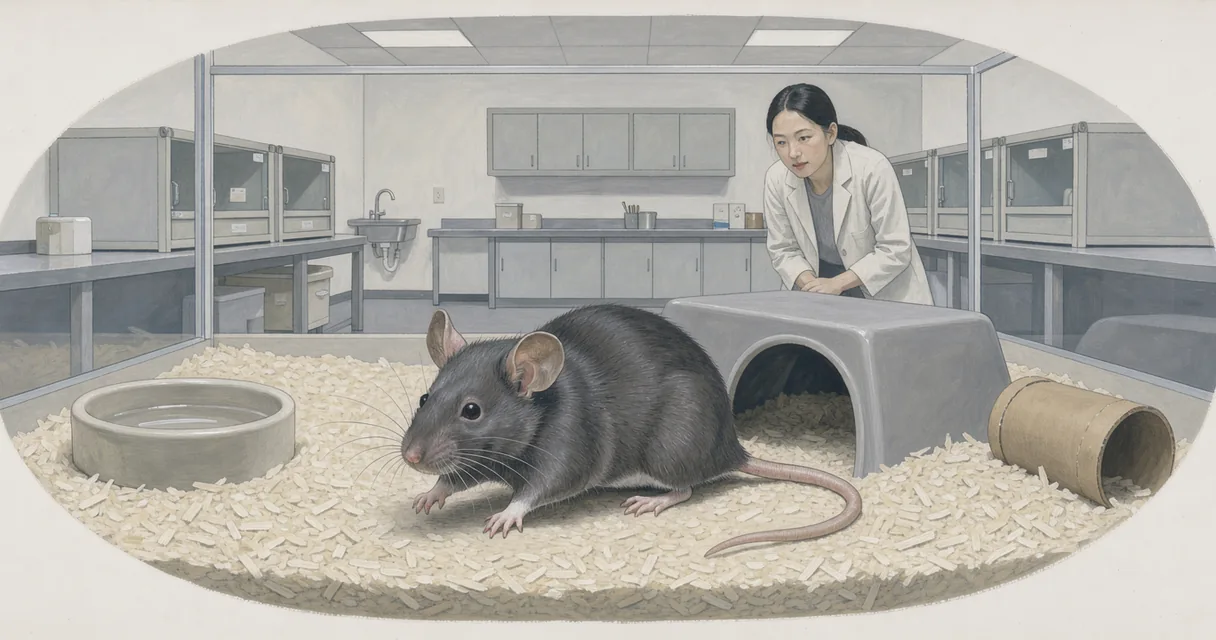
The animal work fills in the design rationale. In GHRH-knockout mice, 2 micrograms of CJC-1295 once every 24 hours fully normalized body weight and length, while dosing every 48 to 72 hours grew progressively less effective — evidence that the long-acting analog's once-daily schedule is enough to restore GH-axis-dependent growth [7]. A proteomics study in eleven healthy men found reproducible serum protein shifts that tracked linearly with IGF-1, hinting at biomarkers of axis activation [3].
And then the gaps. There are no large efficacy trials and no long-term safety data in healthy adults. A Phase-2 program in HIV-associated visceral obesity was discontinued, and the DAC development line did not advance [1]. CJC-1295 is not approved for human use anywhere. We treat those facts as findings in their own right, surfaced rather than buried, and we walk the published research findings in full on the research page.
Where this site goes from here
This is an editorial digest, organized so a careful reader can get the real shape of the evidence in a few pages. The research page walks every study and the reported concerns. The DAC vs no-DAC page is the structural heart — the one distinction that, once understood, prevents most of the confusion around this compound, including the half-life contrast and the Modified GRF 1-29 question. The GH / IGF-1 axis page follows the signal from receptor to pulse to IGF-1 swell, and is where the ipamorelin two-receptor rationale lives.
The doses used in the research page reports what was administered to which species, at what dose, by what route — never a human protocol. The common questions page answers the queries people actually type, and the study references page lists every citation with its DOI and PubMed link. Nothing here is dispensed, sold, or prescribed; the title above this page deliberately reads CJC-1295 as a subject of study, not a product on a shelf.
What is CJC-1295?
A synthetic analog of growth-hormone-releasing hormone built on hGRF(1-29) with four protease-resistant substitutions; the DAC variant adds covalent serum-albumin binding for a multi-day half-life [6]. The no-DAC form keeps the substitutions but lacks the albumin linker and is short-acting.
What does CJC-1295 do?
It binds the pituitary GHRH receptor to stimulate growth-hormone release, which in turn raises IGF-1 [6]. In healthy adults, single doses elevated GH and IGF-1 for days, with the half-life estimated at 5.8 to 8.1 days [1]. It moves biomarkers in research participants; it is not an approved therapy.